

How much space does each door need?
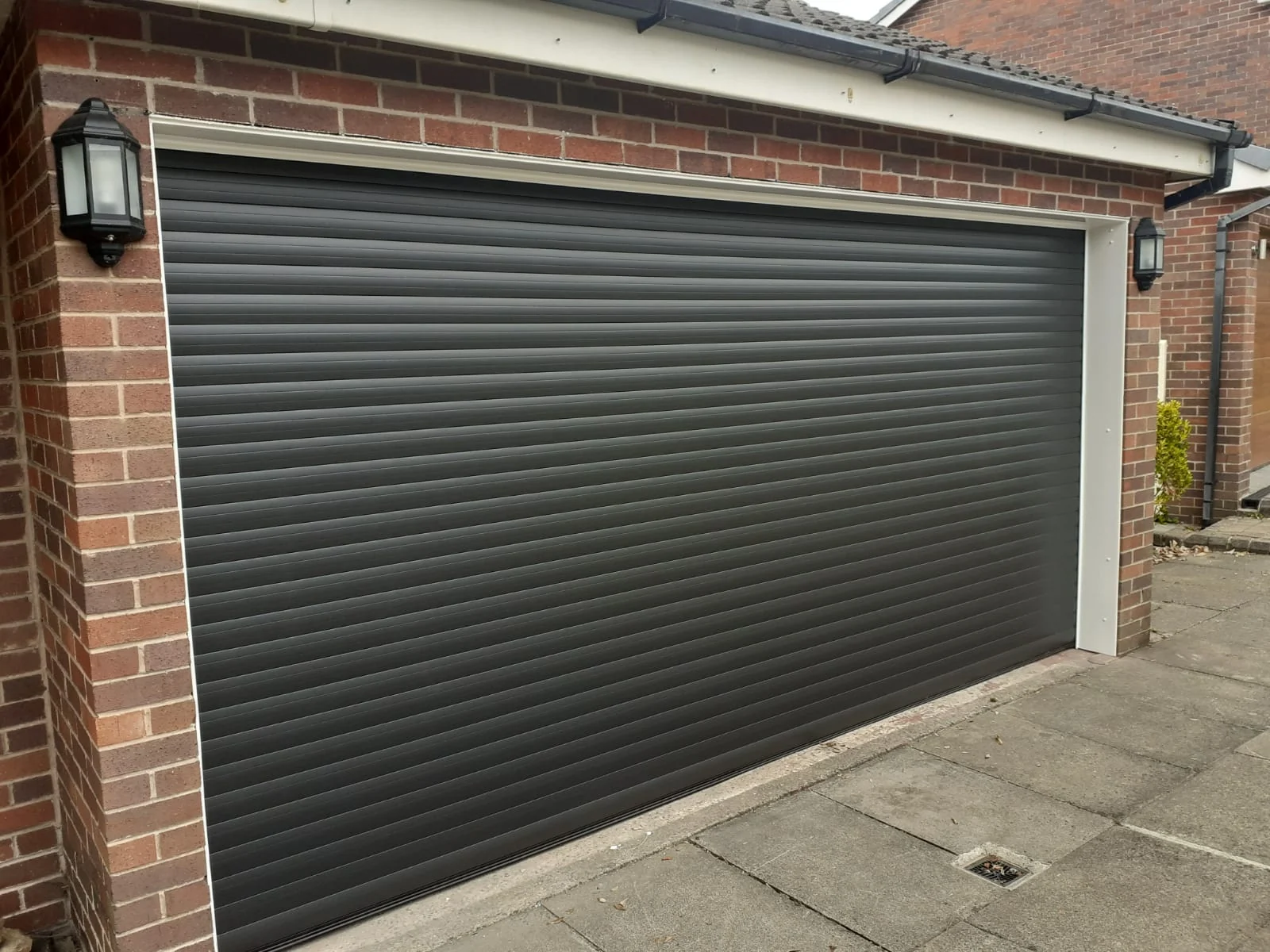
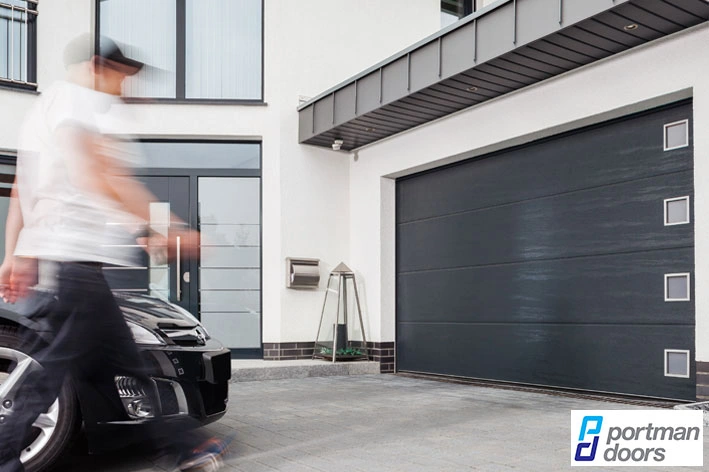
A roller door winds around a barrel above the opening, usually inside a box. A sectional door rises in panels and follows tracks back beneath the garage ceiling. Both avoid the outward opening sweep of a conventional up-and-over door, but neither fits every opening without checks.
A low ceiling does not automatically make a roller door the answer: its box still needs room. A sectional installation also needs suitable track space. Ask the surveyor to check pipes, lighting, roof structure and storage, as well as headroom and side room.
The important measurements are the usable drive-through width and height after fitting. Mention your vehicle’s height, any roof equipment and how close you normally park to the opening.
Roller and sectional doors at a glance
| What matters to you | Roller garage door | Sectional garage door |
|---|---|---|
| Space inside | Curtain coils above the opening; check the box position and dimensions. | Panels run beneath the ceiling; check the full track path. |
| Insulation | Compare the actual complete-door rating and seals, not the insulated label alone. | Insulated-panel options are available; compare the complete specified door. |
| Appearance | Narrow horizontal slats create a consistent curtain pattern. | Broader panels offer different layouts, textures and glazing options. |
| Automation | Confirm the operator, controls, release arrangements and included accessories. | Confirm the operator, controls, release arrangements and included accessories. |
| Security | Ask for documented features and any certification for the quoted assembly. | Ask for documented features and any certification for the quoted assembly. |
| Total cost | Compare the installed scope, not just the door price. | Compare the installed scope, not just the door price. |
Which is better for insulation?
Compare the specific doors being quoted, rather than assuming that one door family always wins. Ask whether the thermal information describes a panel or the complete door, and which dimensions and configuration it covers. A lower U-value means less heat transfer for the item being measured; a panel-only value is not a fair comparison with a whole-door value.
Explain whether your garage is attached to the house, heated, used for parking or used as a workshop. Ask how glazing, seals and the condition of the opening affect the proposal. An insulated door does not guarantee a dry, draught-free garage or a particular saving on your energy bill.
What about automation and security?
If remote operation matters, compare the exact motor and controls included. Ask how you would get access during a power cut, particularly if the garage has no other entrance. Check whether phone control or keypad access is included, optional or dependent on extra equipment.
For security, request details for the quoted door and operator combination. Do not assume that a thicker-looking panel, an electric motor or a description such as ‘secure’ proves a particular resistance rating. Any certification should apply to the actual specification being offered.
Is a roller or sectional door cheaper?
There is no dependable answer without matching the size, specification and installation scope. Ask for an itemised quotation covering the door, controls, fitting, removal of the old door and any work to the opening. Clarify electrical work, building work and other exclusions before comparing totals.
Check the current lead time for your chosen finish and options. Read the warranty terms for the door, operator and installation separately, including any cleaning and servicing conditions. A headline price is less useful than knowing exactly what will be supplied and supported.
Five questions to ask at your survey
- What clear opening width and height will remain after installation?
- Where will the roller box or sectional tracks sit, and what needs moving?
- Which door, operator, controls and accessories are included in the quotation?
- What performance information, warranty terms and maintenance requirements apply?
- What work is excluded, and what is the current lead time for this specification?
Could another door type suit you better?
If you mainly walk into the garage for bikes, tools or bins, it is worth comparing side-hinged doors too. An up-and-over door may suit a different set of priorities. Start with your everyday use, then narrow the choice with a survey.
Find the right fit for your garage
Tell Portman how you use the garage and what you want to improve. A free garage-door survey can help establish the suitable options before you choose the finish.
Book a free garage door surveyTechnical references
- Garador: roller-door opening and layout
- Teckentrup: sectional-door options
- Teckentrup: thermal performance and product limitations
Use product-specific documentation and a survey to confirm the specification for your garage.


