

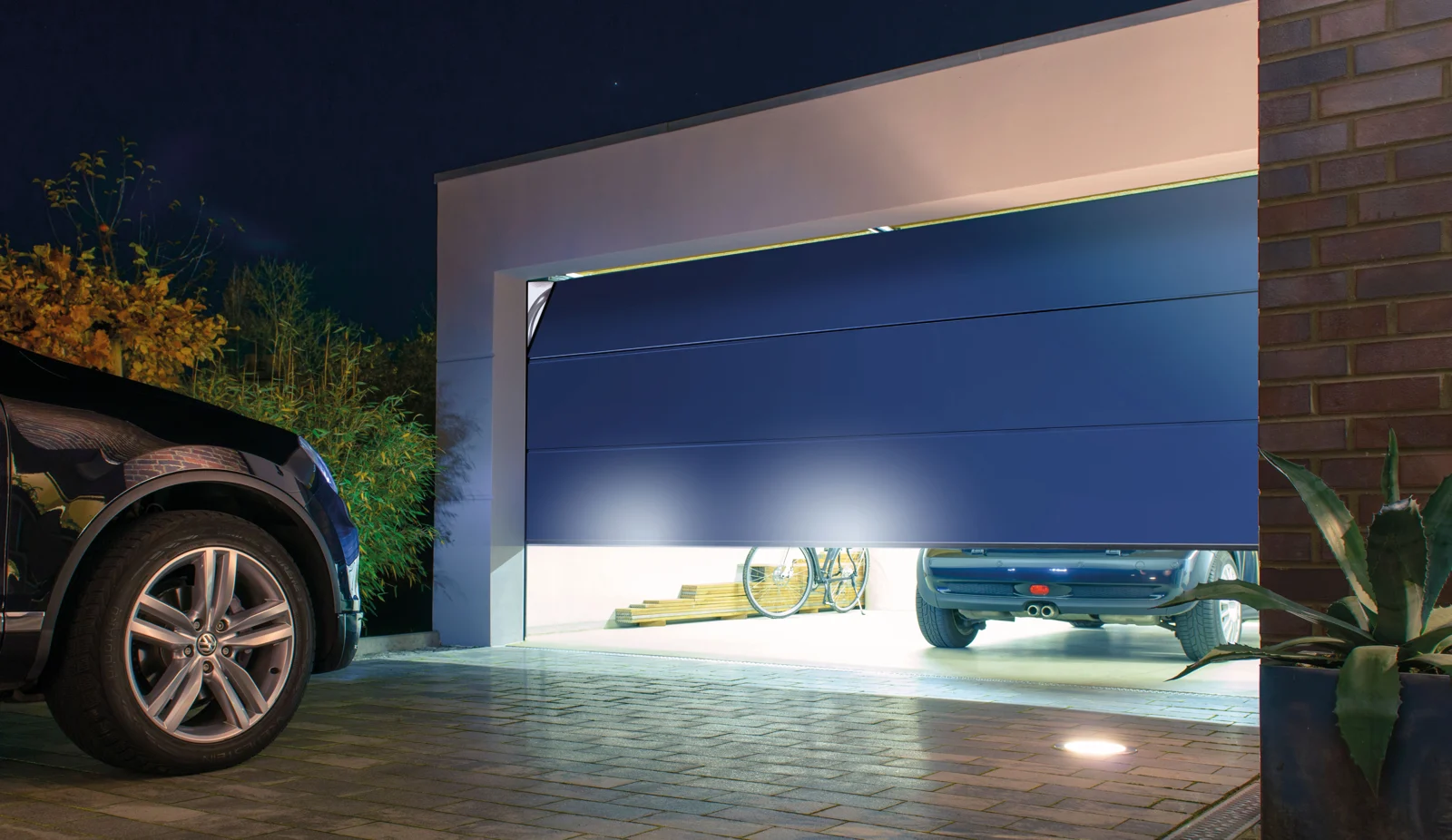
What could an insulated door improve?
If you are replacing an uninsulated or poorly fitting door, an appropriate insulated specification may help reduce heat loss through that part of the garage. The practical benefit will depend on the starting point and how the rest of the space is built and used.
An attached garage, a heated workshop and an unheated parking space do not have identical priorities. Explain what feels uncomfortable or inconvenient now, rather than choosing on panel thickness alone.
- Attached garage: explain which rooms adjoin it and whether the garage itself is heated.
- Workshop or hobby space: discuss when you use it and the conditions you want to improve.
- Storage: point out any existing moisture problems and explain what is stored.
- Parking: balance insulation with reliable access, clear opening dimensions and budget.
What does a garage-door U-value mean?
A U-value describes heat transfer. When you compare equivalent items, a lower number means less heat passes through. The units are W/m2K, but the first buying question is simpler: what exactly was measured?
A panel-only figure does not include the same parts as a complete-door figure. Request whole-door performance information for the proposed product, and ask which reference size and configuration it covers.
A manufacturer example: two figures, different scopes
Teckentrup’s CarTeck guidance publishes these examples. They are not competing ratings for the same measurement.
| What the figure covers | Published reference | How to use it |
|---|---|---|
| 40mm insulated panel | 0.56 W/m2K | A panel rating, not the performance of the entire door assembly. |
| Complete reference CarTeck Automatic door | 1.38 W/m2K | The whole-door example quoted for an 8ft x 7ft door in that guidance. |
Neither number is a quotation for every door size, glazing option or model. Ask for the current performance information for your exact specification. These figures do not predict a temperature increase or a financial saving.
Manufacturer reference: Teckentrup: complete-door and panel U-value example.
Why do the floor, seals and opening matter?
Discuss the threshold, floor level, surrounding structure and visible gaps at the survey. The quotation should identify any preparation or remedial work needed, and who is responsible for it.
Do not assume that a new insulated door corrects an uneven floor, drainage problem or every source of draughts. A garage door also has product-specific limits: ask what you can realistically expect in wind and rain.
Will an insulated door stop condensation?
Insulation is not a diagnosis of damp or condensation. Tell the surveyor where and when moisture appears, whether vehicles enter wet and how the garage is ventilated. Ask which issues relate to the door and which may need separate building advice.
Do not block existing ventilation or assume that sealing every gap is the right answer. If you plan to turn the garage into a habitable room, treat that as a separate building project requiring appropriate advice.
How much could you save on heating?
A product U-value is not a household energy-bill forecast. Any estimate needs a clear starting condition and assumptions about heating, temperature, use and the rest of the building. Be particularly cautious about an identical savings promise for a heated workshop and an unheated garage.
Ask what assumptions sit behind any illustration you are shown. Without that information, a percentage saving, fixed payback period or guaranteed temperature improvement would be misleading. This guide does not promise one.
Which door types should you compare?
Compare the actual products being offered rather than treating ‘roller’, ‘sectional’ or ‘insulated’ as a complete specification. Include opening space, everyday operation, appearance and the installed scope alongside thermal performance.
Portman’s sectional-door page includes the supplied insulation explainer and product information. Use it alongside the manufacturer’s current documentation, then confirm the details for your own opening.
Five questions to take to your survey
- Does the thermal figure cover the complete door, and which size and configuration does it describe?
- How do glazing, seals and the chosen specification affect the proposal?
- Does the opening need work, and is that included in the quotation?
- What should I expect about draughts, water, ventilation and moisture?
- What is the installed scope, and which cleaning, servicing and warranty conditions apply?
Choose the specification around your garage
Tell Portman how you use the space and what you would like to improve. A free garage-door survey can help establish suitable options and the work needed at the opening.
Book a free garage door surveyTechnical references
- Teckentrup: complete-door and panel U-value example
- Teckentrup: garage-door performance and limitations
- Energy Saving Trust: ventilation
Reference guidance does not replace a survey or product-specific performance and warranty documentation.


